
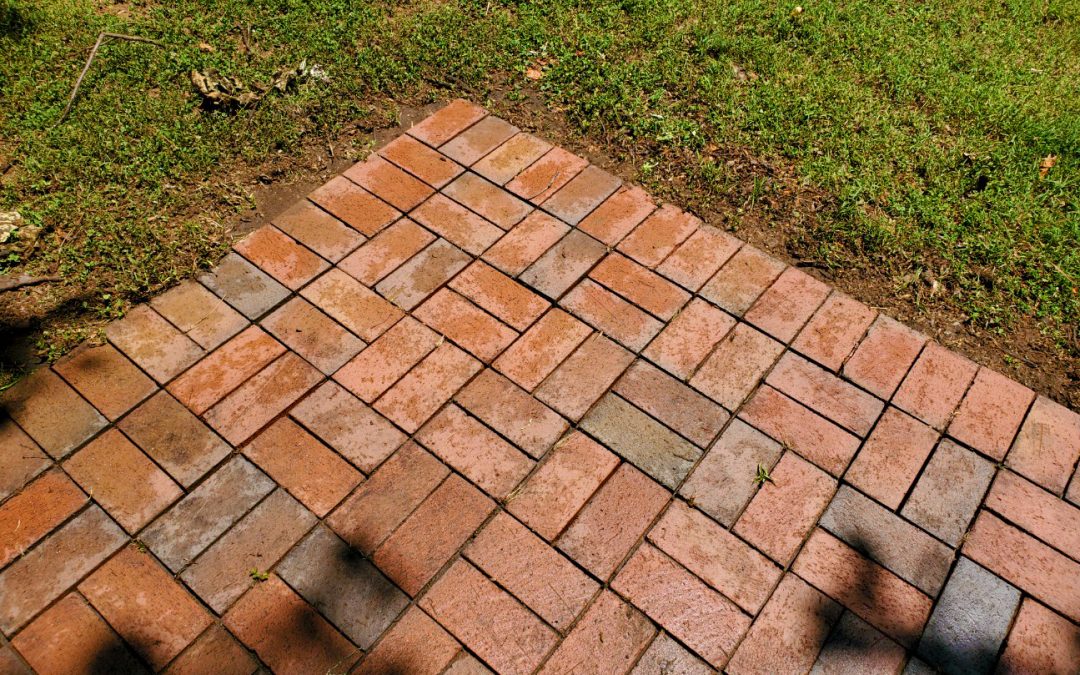
Today’s pressure washers are more compact and consumer friendly then ever and they’re powerful enough to make easy work of cleaning older paver hardscapes: patios, walkways, driveways, etc. And they’re as close as your grocery store.
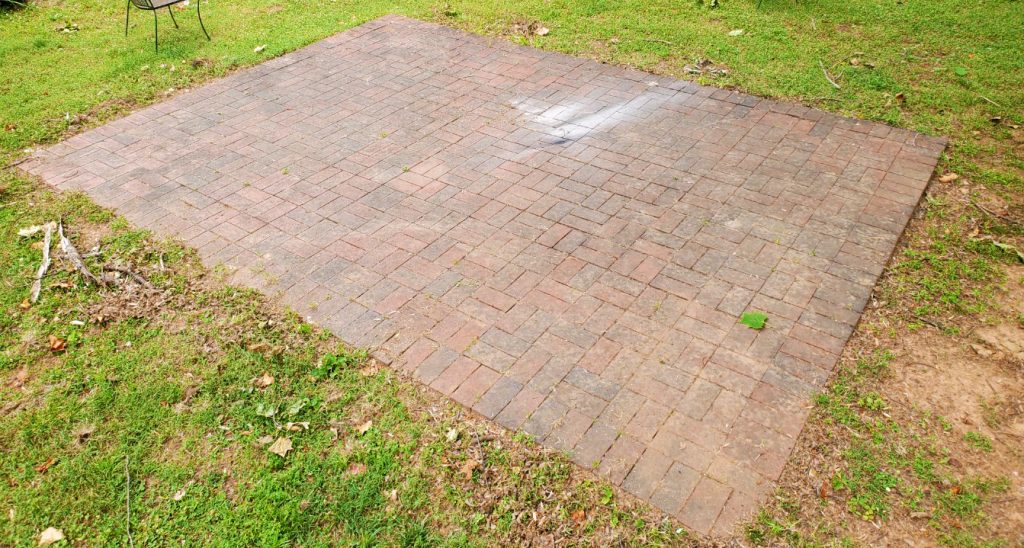
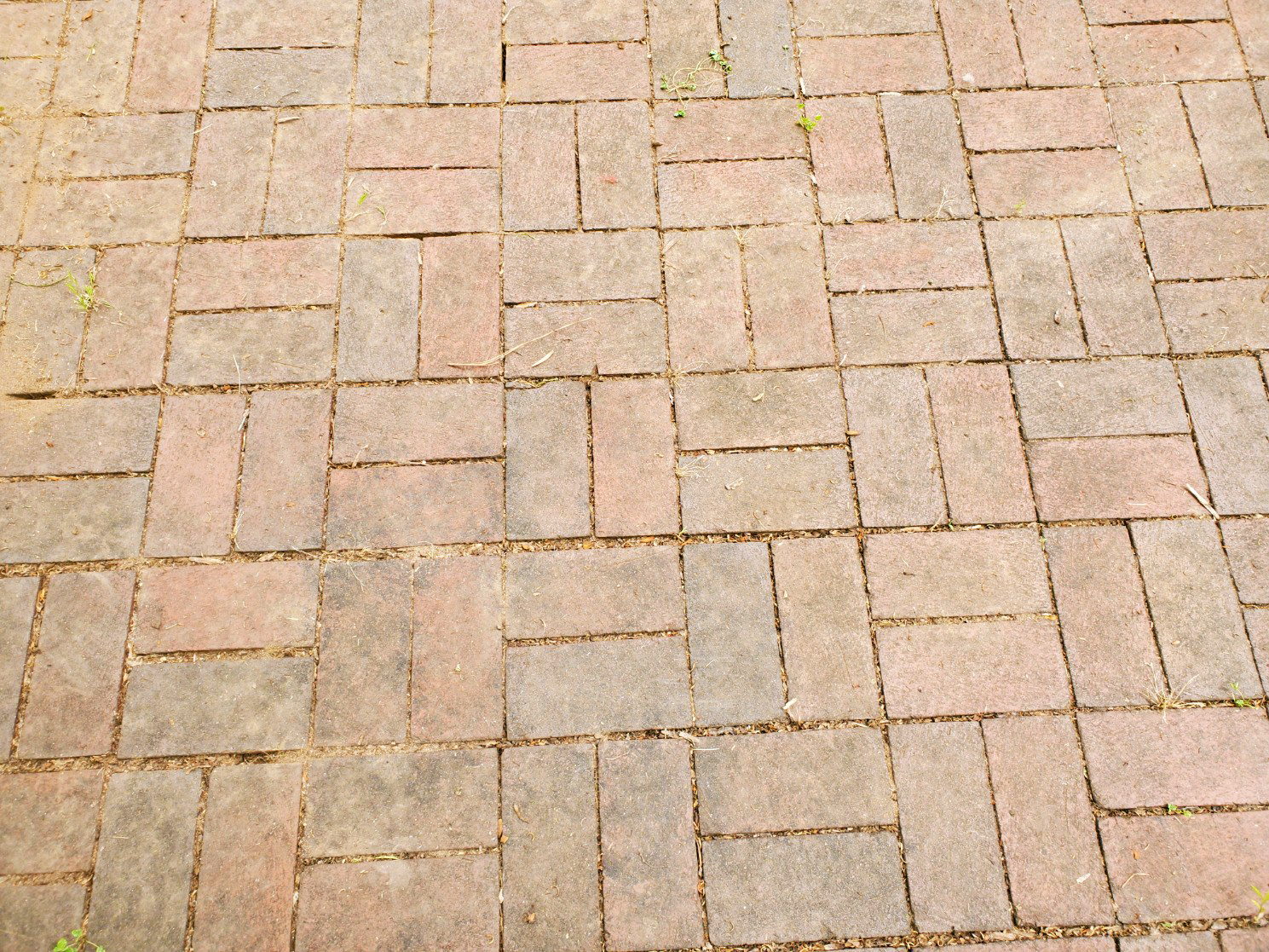
It’s summer. Company’s coming over. And your clay paver patio looks like a big flat patch of topsoil.
No red and brown and orange pavers. No crisp white lines of sand. Nothing.
It’s time to clean it up. We’re suggesting that you go to your local supermarket and rent a Rug Doctor.
Seriously.
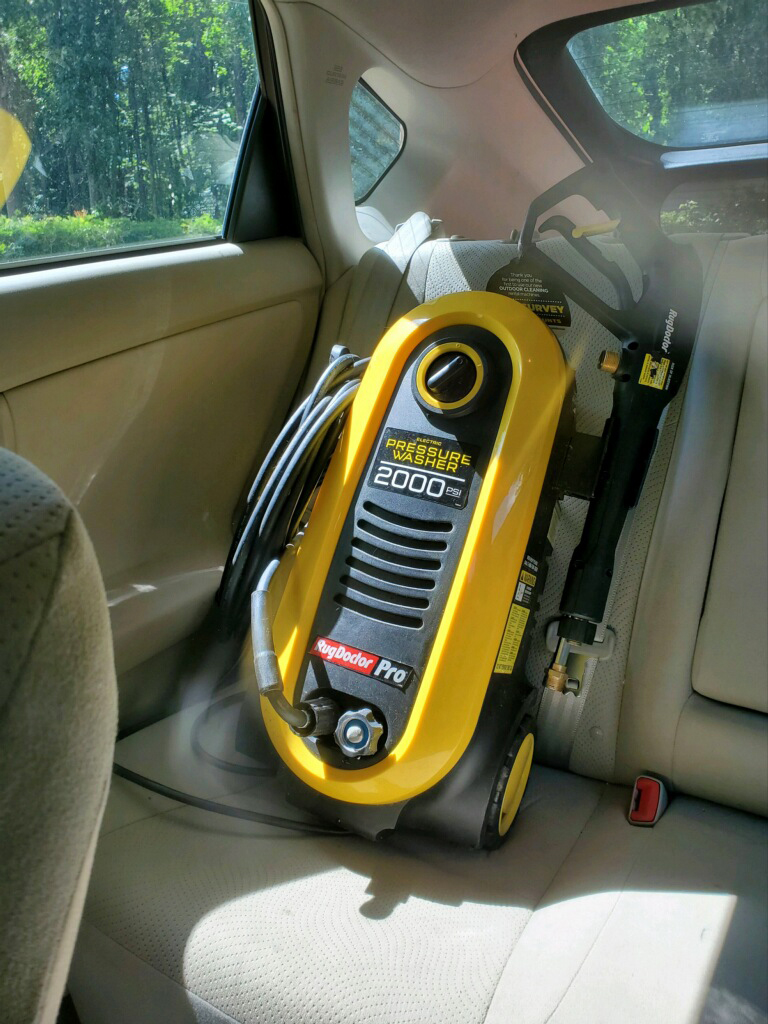
In July 2019, Rug Doctor, which has long rented machines with which to clean carpets and upholstery, introduced a line of pressure washers and wet-dry vacuums to extend its brand of DIY cleaning to patios and decks. Details are here.
We thought we would check it out.
Cleaning a clay paver patio
We’ve been to this rodeo a time or two – with this same patio. We’ve gone with a bleach-and-water solution and plenty of scrubbing to clean it up – to bring back the same color it had when it was made.
It needed cleaning again – and we had heard about the Rug Doctor pressure washer, so we decided to give it a try.
Because it is meant for consumer use, the unit is designed for convenience. It’s small enough and light enough to fit in the back seat of a Toyota Prius, so there’s no need to put it into the bed of a truck. With a 2000 psi rating, it’s powerful enough to clean years of grime off pavers.
(At our wife’s suggestion, we also tested it out on a composite deck and a concrete sidewalk while we had the pressure washer and it worked fine on both. You are welcome, dear.)
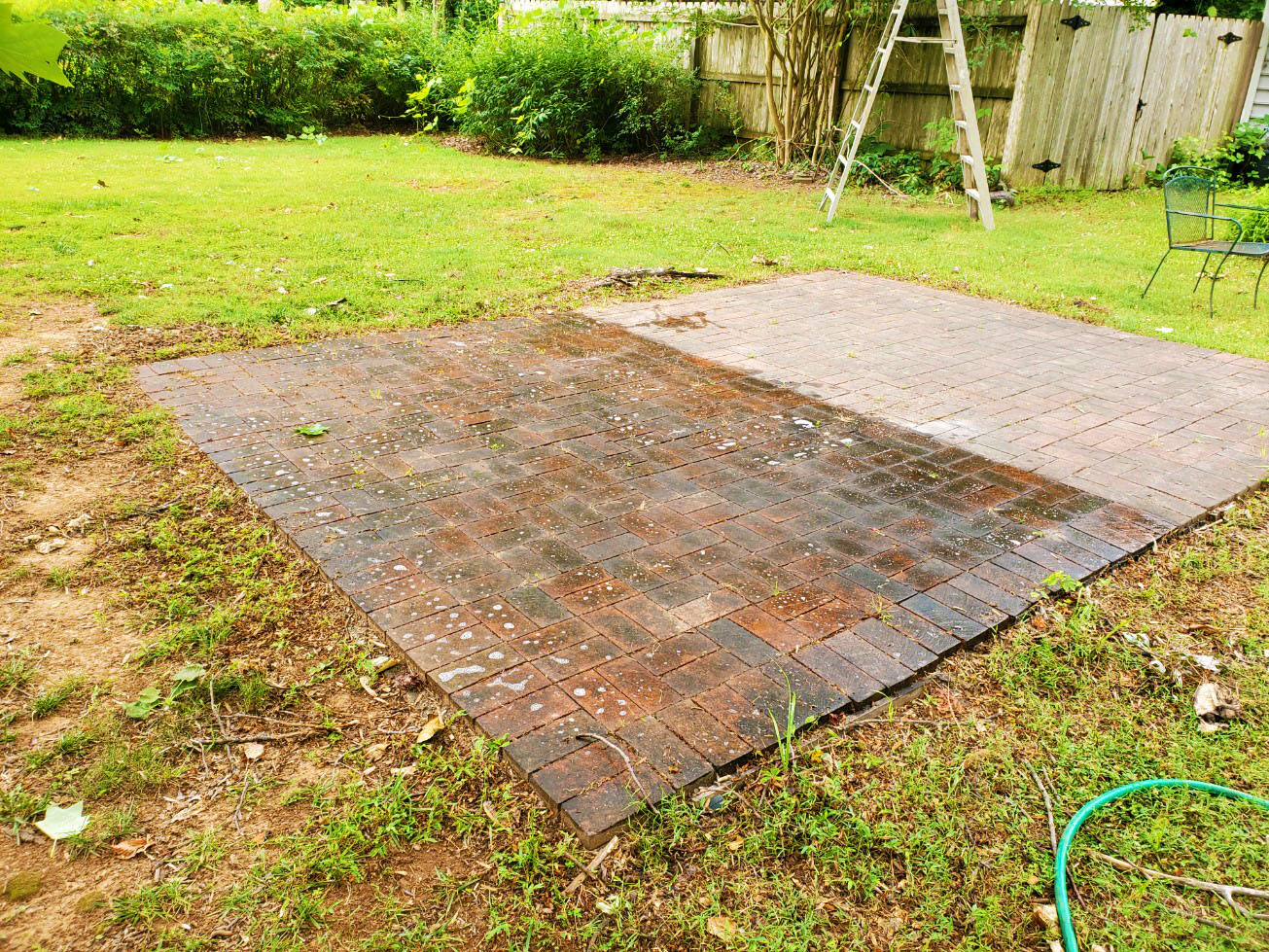

Step by step
Start out by going to the Rug Doctor website.
Go to the dealer locator at the top and put in your zip code. Scroll down the left side to find the letters “RD” in gold on a red or black background, which tells you where your closest dealer is that rents pressure washers.
(We’d suggest calling first to see if one is available.)
To get started, you will need a half-inch garden hose to ensure enough pressure and an outdoor outlet. Otherwise, follow label directions for assembly and operation. There is a QR code on the machine and a toll-free number for customer service if you have questions.
It is mostly putting a wand together, attaching it to a trigger assembly, attaching a hose and plugging it in. Electricity and water ordinarily do not mix, but the unit has a built-in ground-fault interrupter for safety. The wand has an adjustable tip from pinpoint to a wide fan pattern, which means that you can change patterns without having to put on a separate tip for each.
The machine itself has a sensor. Pull the trigger and it works. Stop pulling the trigger, to move the machine around, and it stops automatically.
Start out about 24 inches off the surface of the patio with a wide fan pattern, then narrow it down to about two inches, about the width of a paver. It’s important to stay on the same paver until it is clean. We suggest that you go in one direction for the entire patio, then take a second pass perpendicular to the first.
You will notice that the pressure washer will blow out most of the sand in between the pavers. That’s okay, as the top layer is dirt and grime anyway. We went to our closest big box store, headed to the masonry department (not the garden and patio department) and bought a 60-pound bag of multipurpose sand, which is intended for base and joint material for pavers, and a 5-gallon bucket with a lid.
Sweep the sand into the pavers until the joints are full. Store the remainder in the bucket and put the lid on for storage. In a couple of weeks to a month, you will want to sweep more sand into the joints.
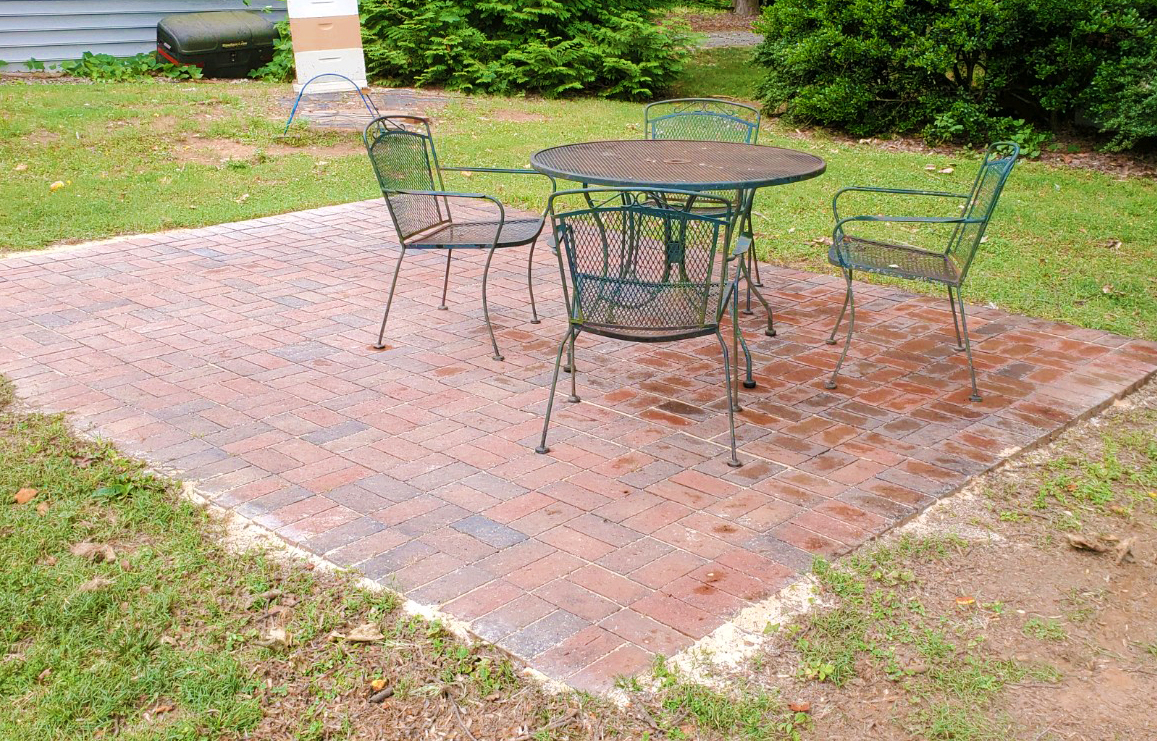
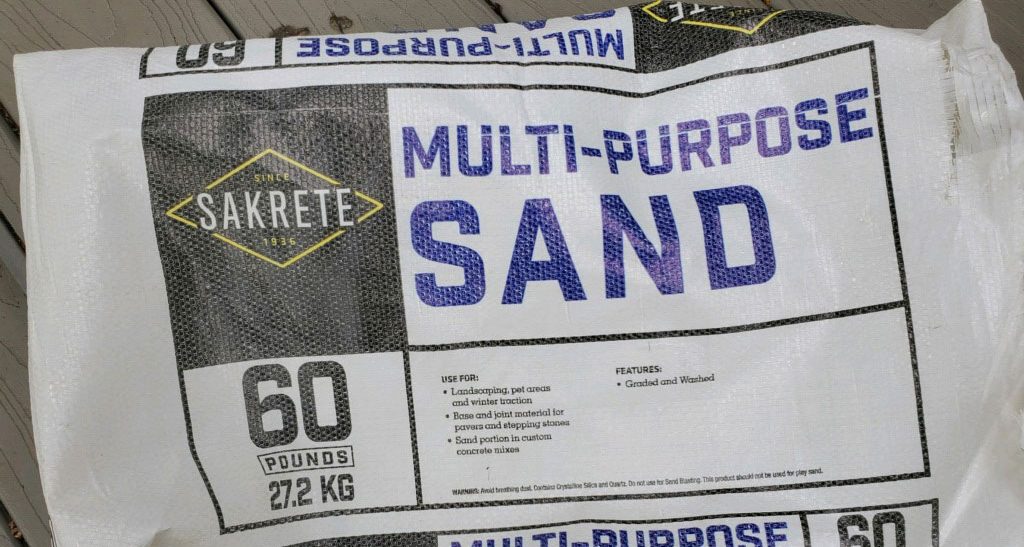
Final step: fill the cleaned paver joints with fresh sand. Just pour and then sweep until all the joints are filled.